

Garden friends and helpers
Koren loves her Pekin bantam chickens. She says, “possibly the best yield of all is the endless joy and pleasure from interacting with these darling little creatures”. Of course her chickens also lay eggs, give manure for her compost, scratch in her garden between crops, help dispose of food scraps, and entice her to get out into her garden with their happy sounds.
Photo by Koren Helbig on Tarntanya Country, Adelaide, South Australia.
![Been learning a lot about permaculture online with milkwood_permaculture and loving applying the many ethics and design principles in the home, garden and well my daily life!
.
Bill Mollison and David Holmgren coined the word ‘permaculture’ in the 70’s to describe ‘an integrated, evolving system of perennial or self-perpetuating plant and animal species useful to man[kind]’ (see holmgren.com.au)
.
A more current definition of permaculture is: ‘Consciously designed landscapes which mimic the patterns and relationships found in nature, while yielding an abundance of food, fibre and energy for provision of local needs’
.
Principle 3 was “Obtain a yield” which seems pretty obvious but actually harvesting the fruits of your labour after all the initial effort can often elude even the most enthusiastic gardener!
.
With this in mind Nick and Kirsten at milkwood_permaculture suggested sprouting and growing micro greens as a quick ‘return on investment’ so to speak so I gave it a whirl!
.
Matteo whipped me up some simple trays from scrap heat-treated pallet wood leftover from the planter boxes (pic. in background) and I added the old picture frames (50c at the tip-shop!) Lined with cardboard then filled with some wood chips for drainage and finished with seed raising mix I made from equal parts sand, garden soil and compost. Once leveled off we sowed broccoli seeds one side and mizuna the other (from #rangeviewseeds bought teros.eco) and watered them in with a spray bottle.
.
Less than a week from sowing we had baby seedlings and now have a rolling snip-able harvest at the back door for salads, topping off eggs and general munching.
.
Almost killed them with kindness by overwatering especially while the frames were down so had to remove part of one crop due to mold, prop the lids open and stop watering for a day or two.
.
Henrietta “our” resident chook, was very curious, pecking at the closed glass but has left them alone now they are up a little higher.
.
Last pic was almost 100%home produce! Homemade sourdough toast with foraged mushroom tapenade, topped off with a local free range egg and home grown micro-greens! Immensely satisfying, delish and nutrish!!!](https://permacultureprinciples.com/wp-content/plugins/instagram-feed-pro/img/placeholder.png)
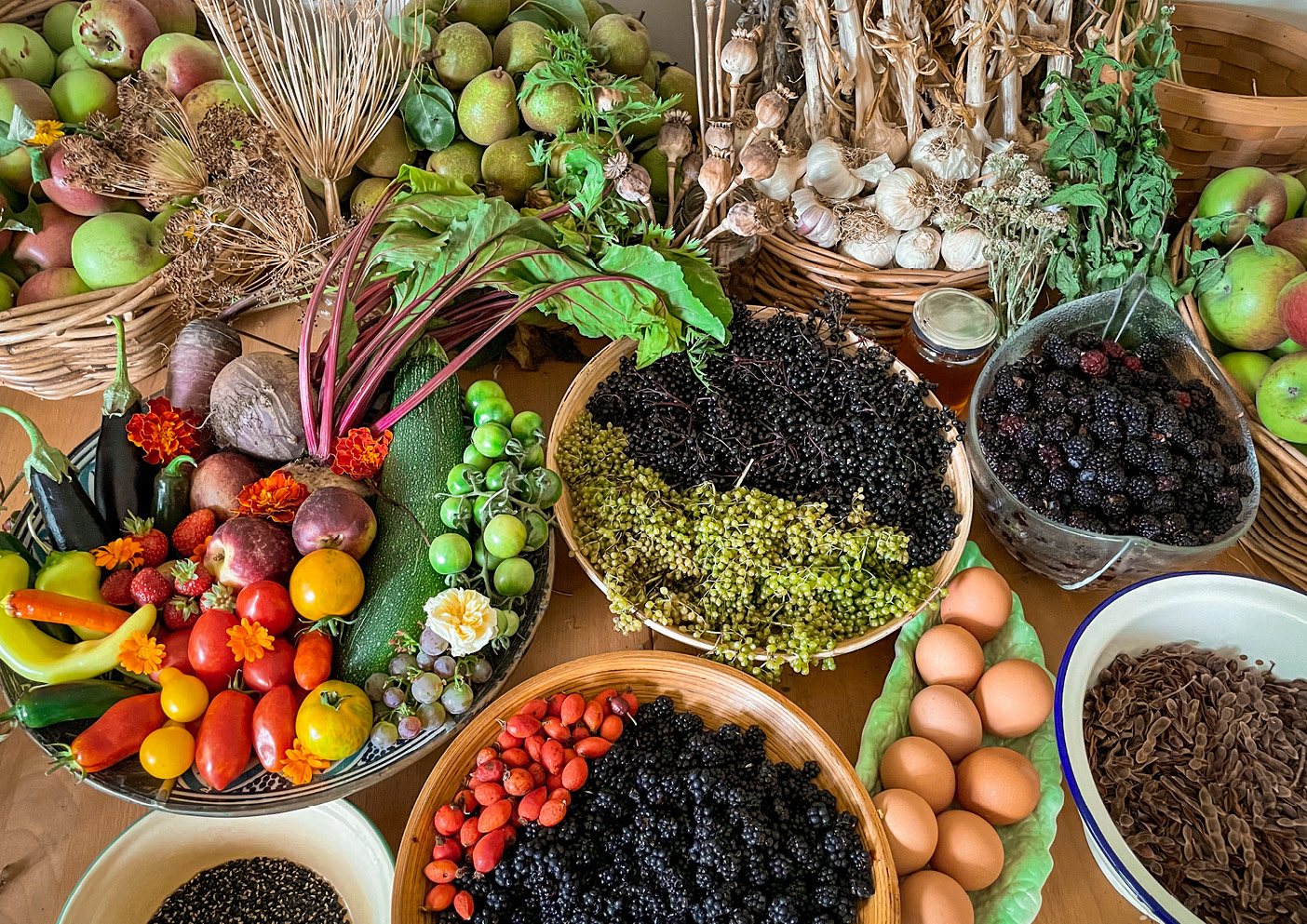
More than meets the eye
This Autumn bounty comes through a web of connections across the land of the Kulin Nations in Victoria. Some produce was homegrown in a Melbourne rental, and more foraged, gleaned and salvaged. Through Anna’s relationships with friends, neighbours, and local produce sharing stands, she obtains a tangible yield by trading, sharing and gifting. For her though, the most important yield is the grounding and connectedness that comes with building local community.
Photo by Anna Matilda, The Urban Nanna on Wurundjeri Country, Melbourne, Victoria, Australia.
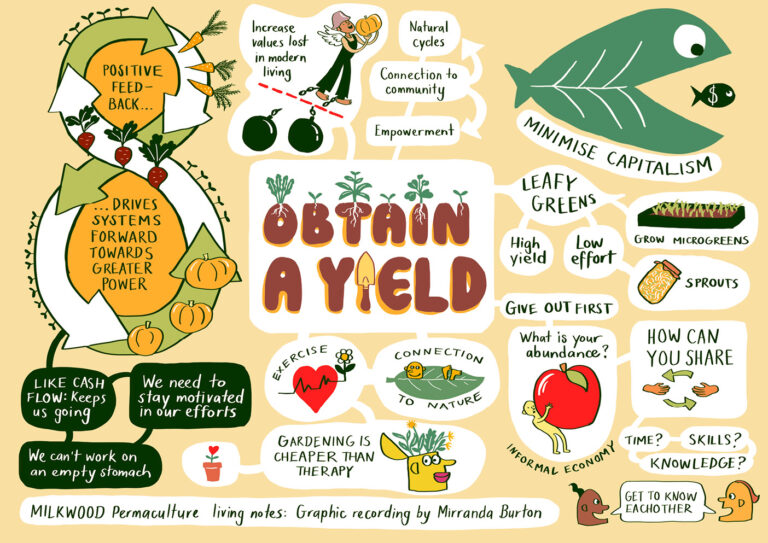
High interest rate
Miranda’s visual permaculture course notes hone her communication skills while helping process what she’s learned. This graphic focuses on the ways we can obtain ‘yields’ and care for ourselves, which also have positive systemic effects. Activities like gardening, skill sharing and exercise generate positive feedback loops of learning, capability and goodwill which can feed more positive activity – growth that doesn’t endanger existence, but strengthens it.
Illustration by Mirranda Burton. Melbourne, Victoria, Australia
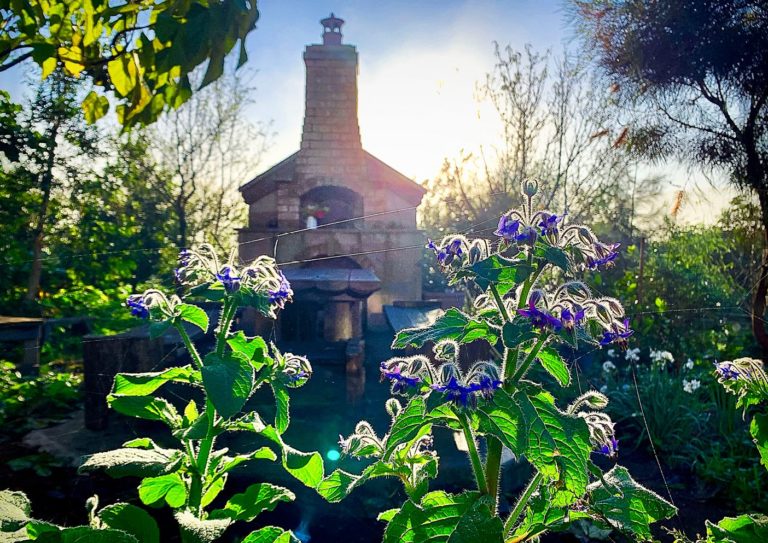
The shrine of good times
Borage in flower and other useful plants border the outdoor seating by Nici and Brett’s woodfired oven, placed right within their productive garden. Food, beauty, space, and habitat for many creatures all contribute to the range of yields enjoyed by the gardeners, friends and family. The health and wellbeing benefits of a beautiful productive home garden integrated with recreational and restful space are impossible to quantify, and are substantial.
Photo taken by Nici Cooper at Limestone Permaculture in Stroud Road, NSW, Australia
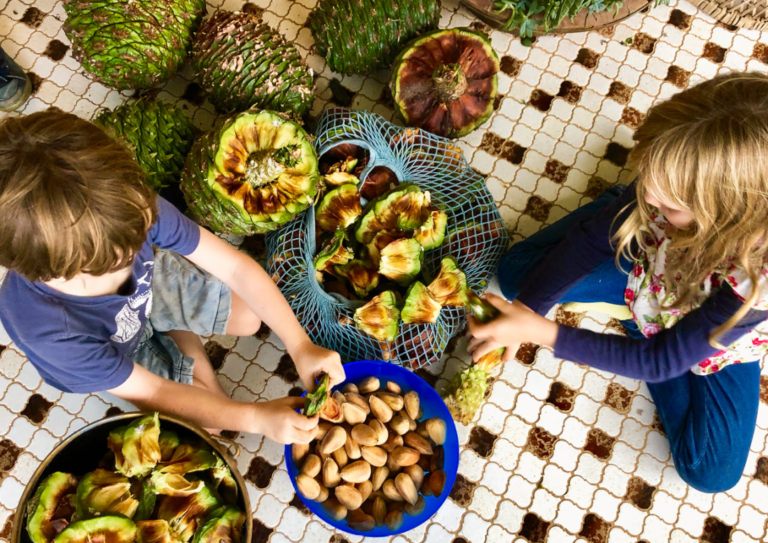
A chance find on a visit to the beach
“As it was Bunya season, Torsten and Ava were looking for the telltale dome shape tops of the trees as they were driven to the beach – and they spotted one! We stopped and collected these nuts. This tree has now become a part of our forage map and the yield goes beyond free nutritious food. Time spent together dehusking and preparing the nuts is an opportunity to reflect upon Australia’s rich indigenous culture that will help us to create sustainable practices into the future.” – Sandi
Photo taken by Sandi Pointner at Eagle Ridge Permaculture in NSW Central Coast, Australia

Permaculture farm-stay
Fair Harvest offers a variety of ways for people to experience a permaculture property. During the warmer months this beautiful tipi is available to accommodate paying visitors and guests. The on-site café offers meals prepared from the extensive organic gardens. There is a venue available for hire, a campground, monthly swap-shuffle-share events that anyone can come to, garden farm tours, workshops, intensive courses and an annual festival in November.
Photo taken at Fair Harvest in Margaret River, Western Australia by Dave and Charlotte
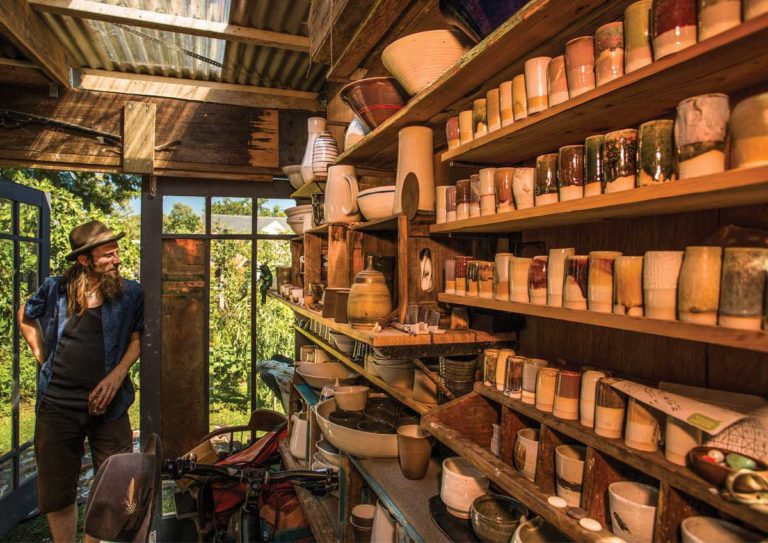
Suburban enterprise
Seth looks over items made by his neighbour at Hibi Farm Pottery Studio, which began when Edwin taught himself the craft by making functional ceramics such as cups, bowls, plates, teapots and jugs for himself and friends. Edwin now makes pots for a living, selling custom pieces to restaurants, cafés, for gifts and the home. All made on-site in small batches ranging from one-off items to full sets. Seth, an instrument maker, creates wooden handles to complement Edwin’s work.
‘Suburban enterprise’ photo contributed by Oliver Holmgren. Hibi Farm features in the book RetroSuburbia
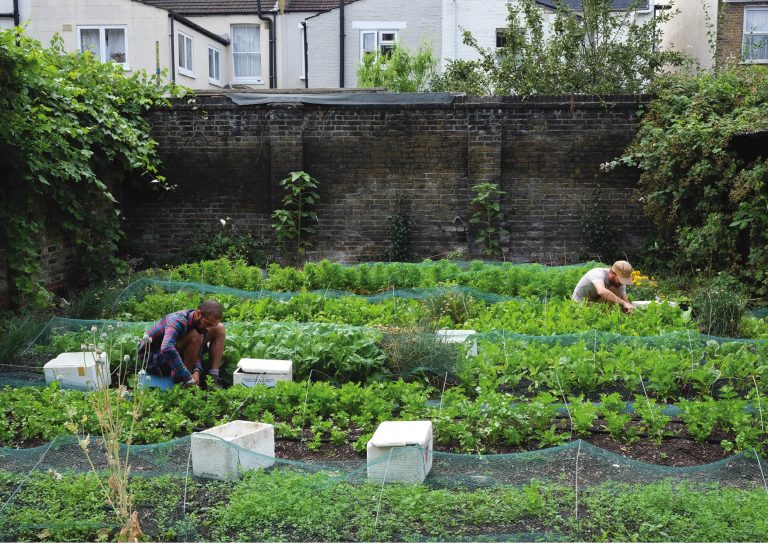
From a wasteland to high production
This Patchwork Farm market garden near the centre of London previously contained more than 30 tonnes of brambles, rubble and concrete and was replaced with 30 tonnes of organic compost, raised beds and fruit trees. Volunteers and trainees join the Growing Communities team to learn skills in growing high quality produce with a guaranteed market through their organic fruit and vegetable scheme. All part of developing practical, long lasting alternatives to the current food system.
Photo contributed by Shyamantha Asokan
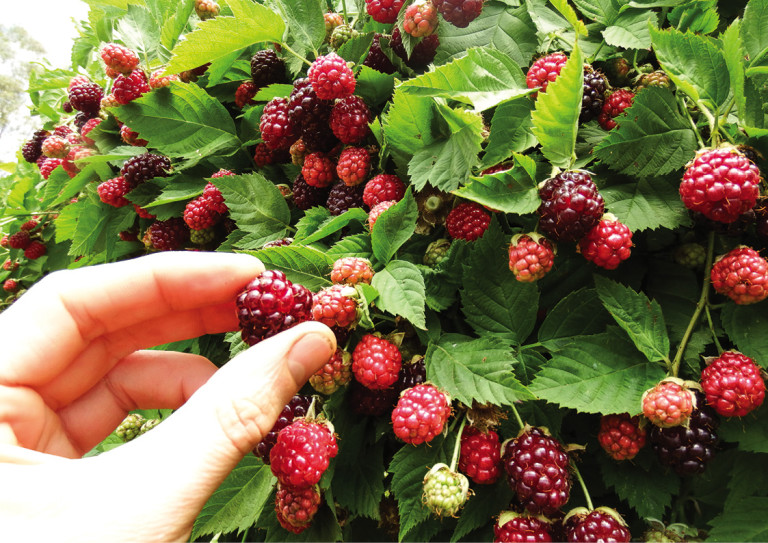
Berries in the laneway
The seasonal maintenance requirements of Boysenberries can be off-putting, but yields impress. Canes are fed through mesh as they grow to form a screen between the public laneway and the owners property, with excess pruned back. During winter, most leaves fall, those that haven’t are removed to reduce habitat for insects. Flowers bloom in spring, attracting the bees, and with summer comes harvest. Wait until soft, then pick early and pick often for maximum benefit.
Photo contributed by Richard Telford
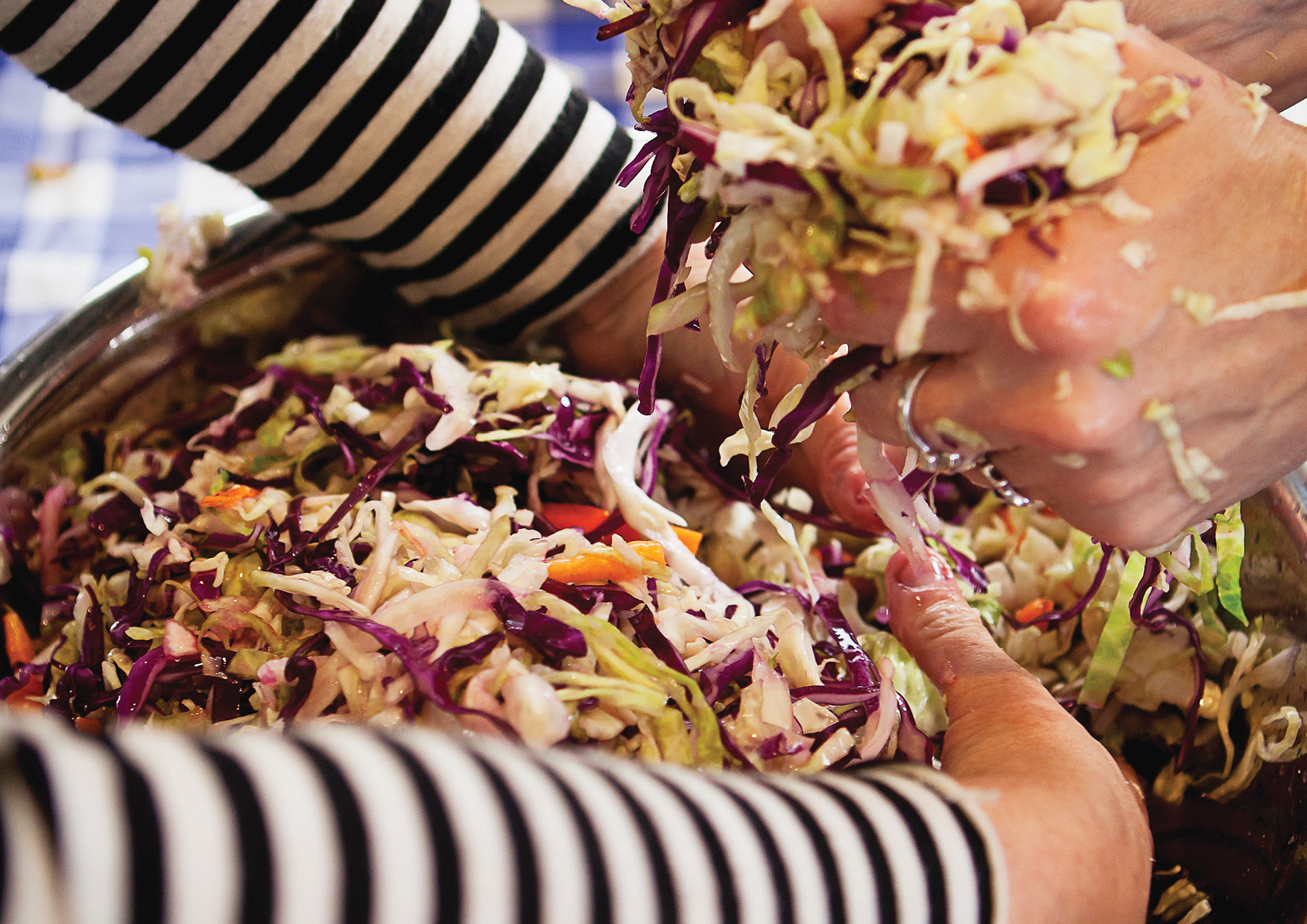
Transforming food for flavour, longevity and vitality
Lifeless supermarket food often contains unfamiliar ingredients that are used to enhance taste and increase shelf life. The process of fermenting uses bacteria and /or fungi along with the enzymes that they produce to preserve while making food easier to digest, less toxic and if all goes well, more delicious. Making sauerkraut is safe and easy to do and eating it builds diverse bacterial flora in our gut which can improve our immune function, giving us even greater returns for our efforts.
Photo contributed by Kate Berry
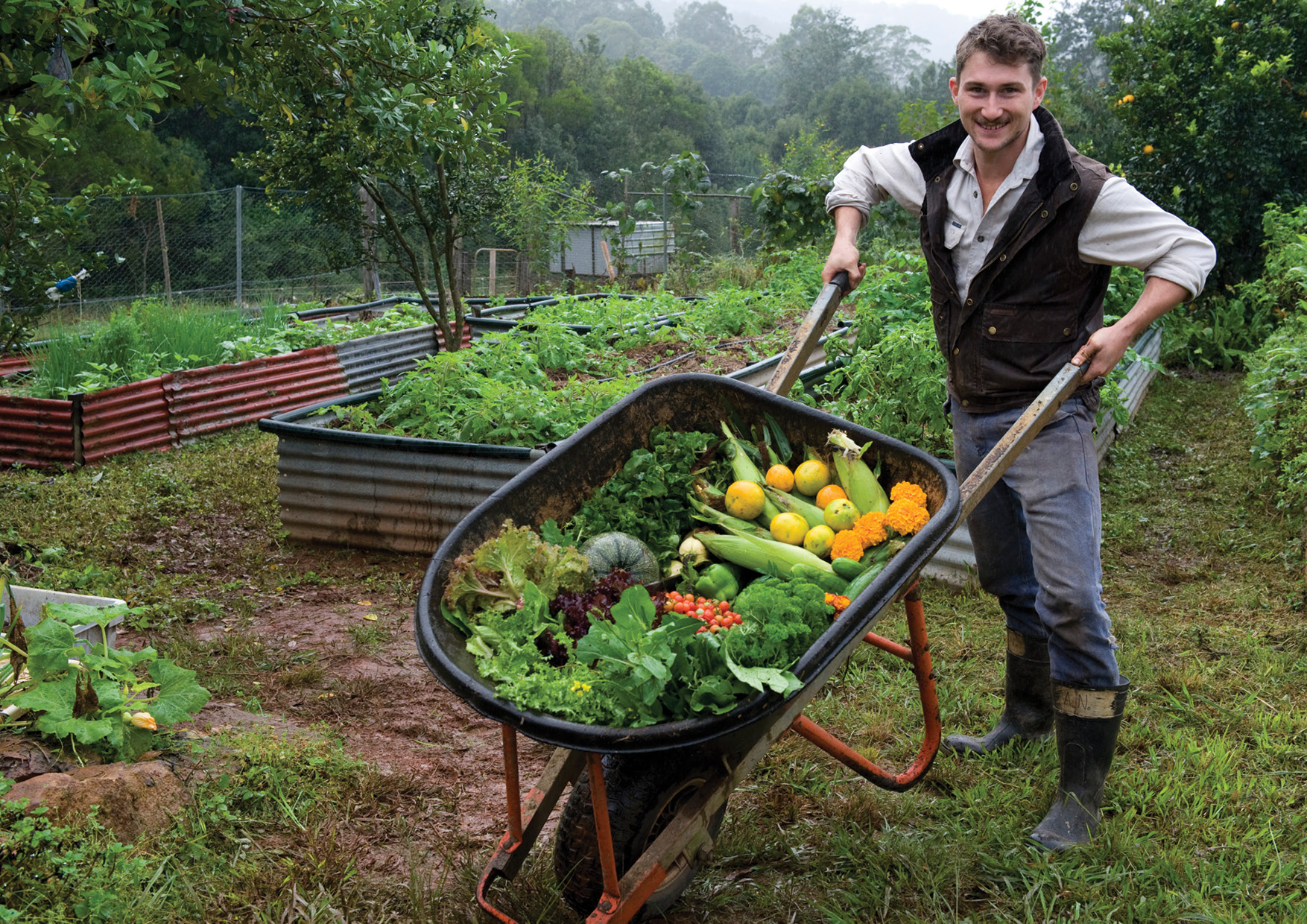
A barrow full of goodies
Alex shows a diverse array of produce grown at Zaytuna Farm’s urban garden demonstration site. The farm hosts hundreds of students, WWOOFers and interns every year who help to manage the gardens that provide food during their stay. Food gardening has always been central to permaculture teaching because it is the most effective way of reducing human impact on the planet, while increasing resilience and providing a great incentive to continue working.
Photo contributed by Craig Mackintosh
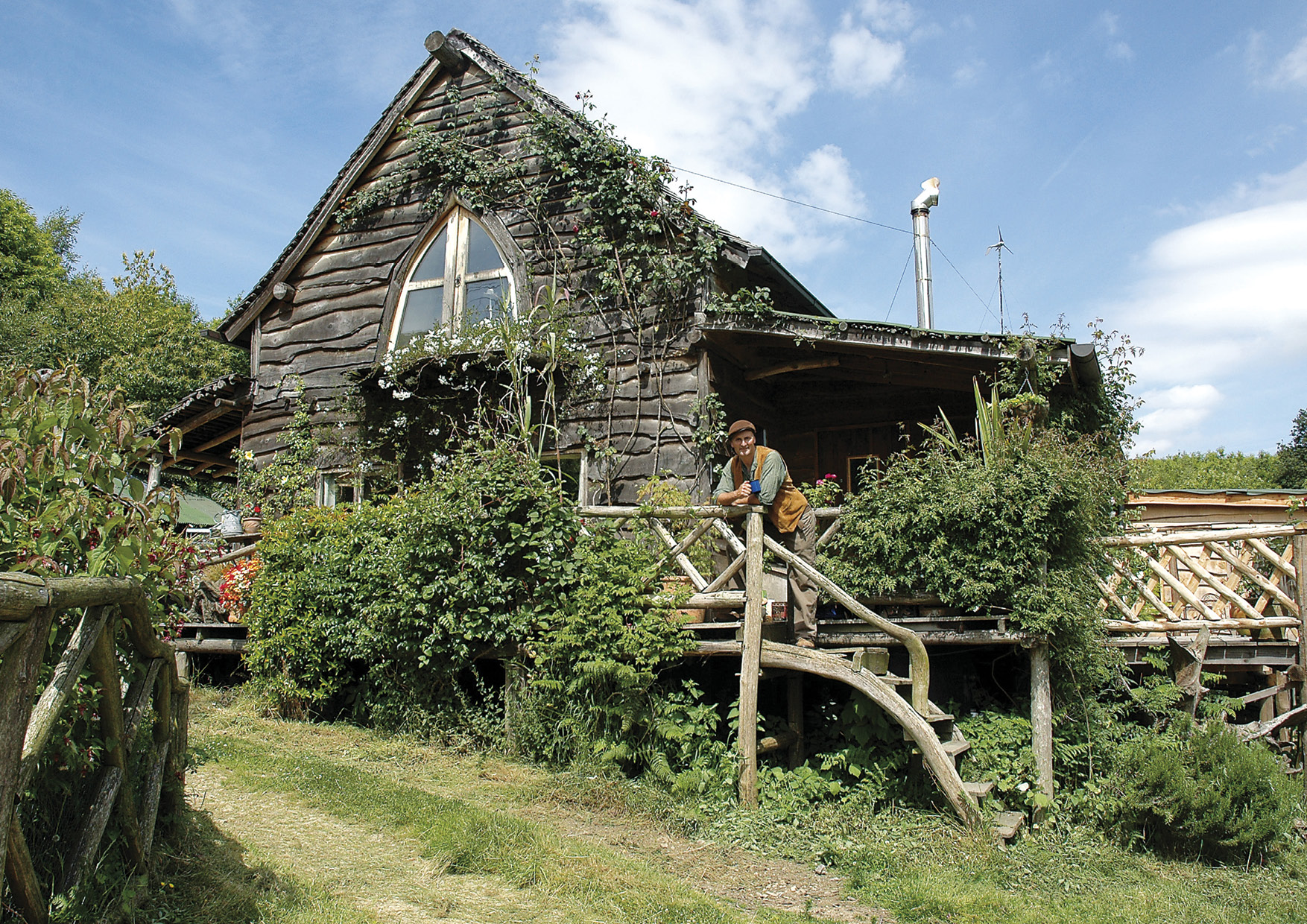
A woodlands home
The woodlot that Ben Law manages provided the materials that he used to build his own home and workshop. The large straight trunks were milled up and used for flooring and cladding. Coppiced round poles were used for framing, fencing and furniture making. He uses off-cuts to cook and heat his home and sawdust is saved for his composting toilet. Ben has used the skills he developed here to set up an ecobuilding company, train apprentices, write books and run courses.
Photographed at Prickly Nut Woods in the UK by John Adams. See Ben’s book Roundwood Timber Framing in our store.
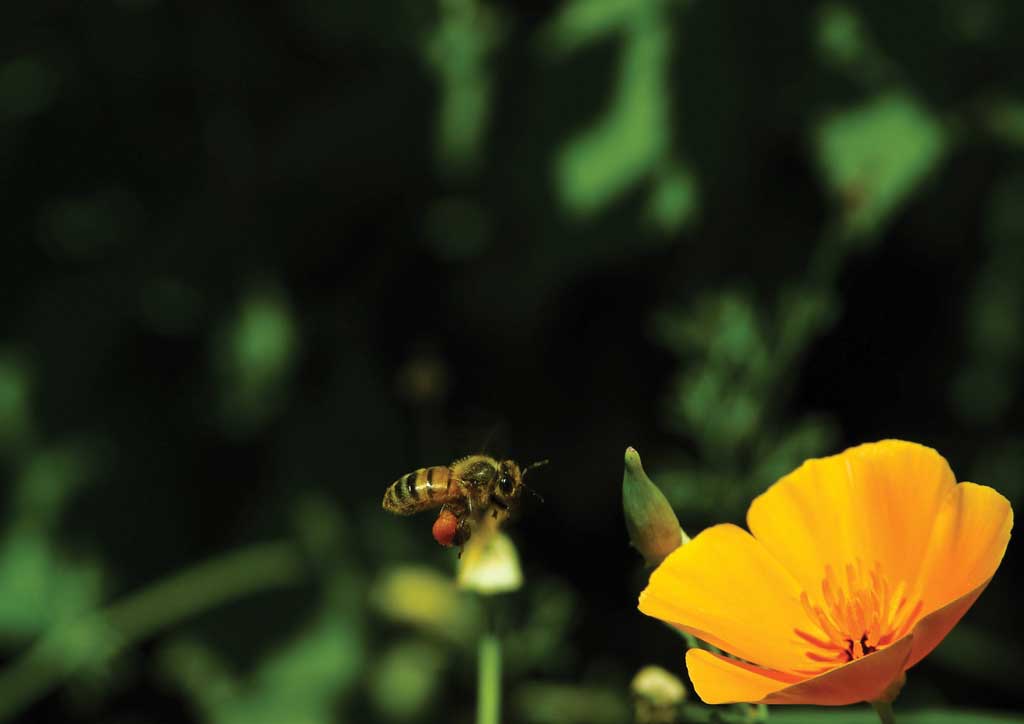
Saving up for a rainy day
‘Sitting in the garden on a warm sunny day, watching these amazing little worker bees ferry such loads tirelessly gives me great pleasure. During winter, with a mouth-full of bread and honey, I am reminded of their wonderfully successful efforts to both obtain a yield and store that yield for the rainy days ahead.’ Oliver Holmgren
Photographed at Venie Holmgren’s Garden, Australia by Oliver Holmgren.
Give so that we may receive
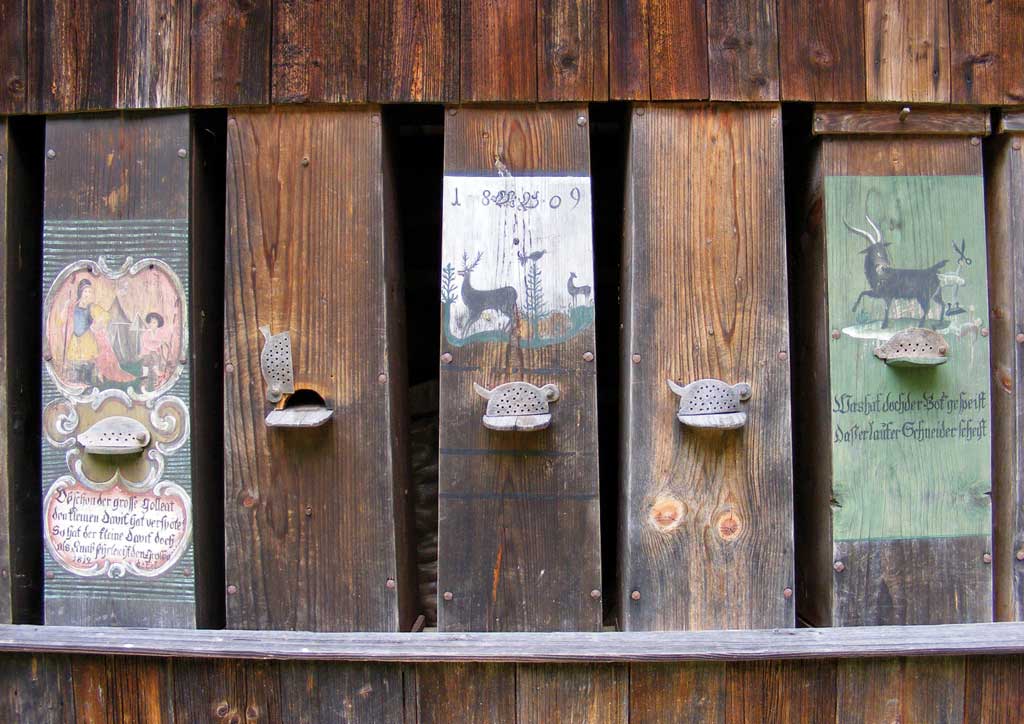
Bee houses in cold climates have a long tradition. Strongly constructed houses like this one keep the hives warmer in winter and protect them from heavy snow loads, strong winds, storm damage, stealing, boars, and bears (long ago). The artworks help orient the bees to their own entrance.
Photo contributed by Christoff Schneider.
Hoshigaki in rural Victoria
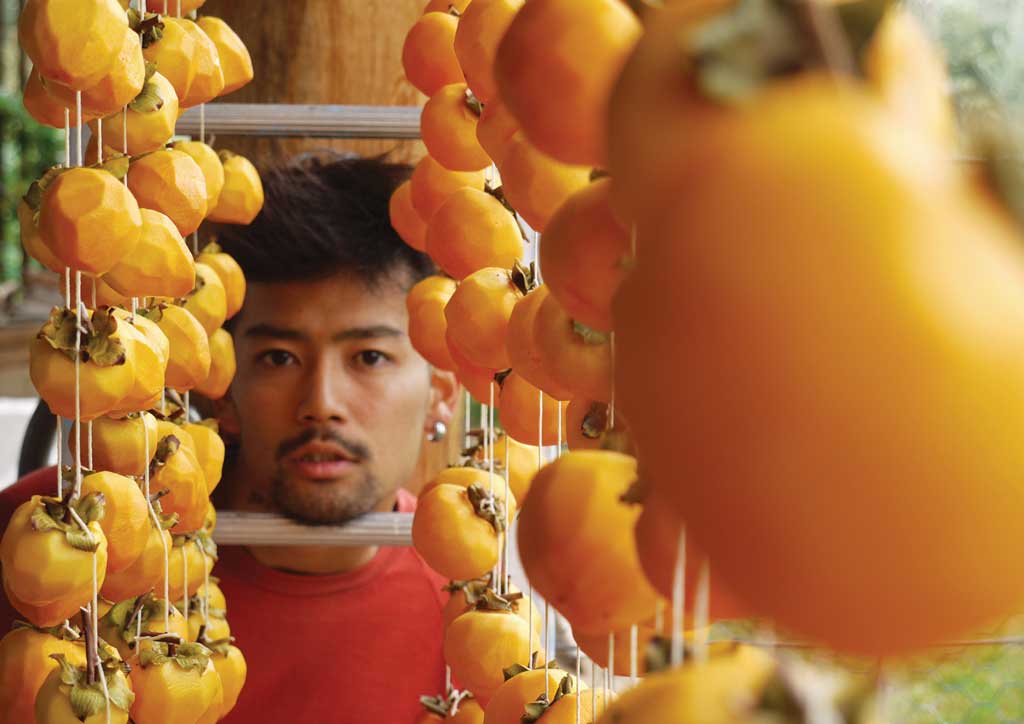
Yuta was caretaking and WWOOFing at Murrnong as the persimmon crop ripened. After phoning his grandmother in Japan for advice he was able to share some valuable skills and knowledge. These persimmons (kaki) were peeled while still hard and hung in strings to ripen and dry undercover, in full late autumn sunlight. Decorative treats, preserved for the winter. Persimmon trees are beautifully ornamental and highly productive.
Photographed at ‘Murrnong‘ by Yuta Kawaber.
Abundance
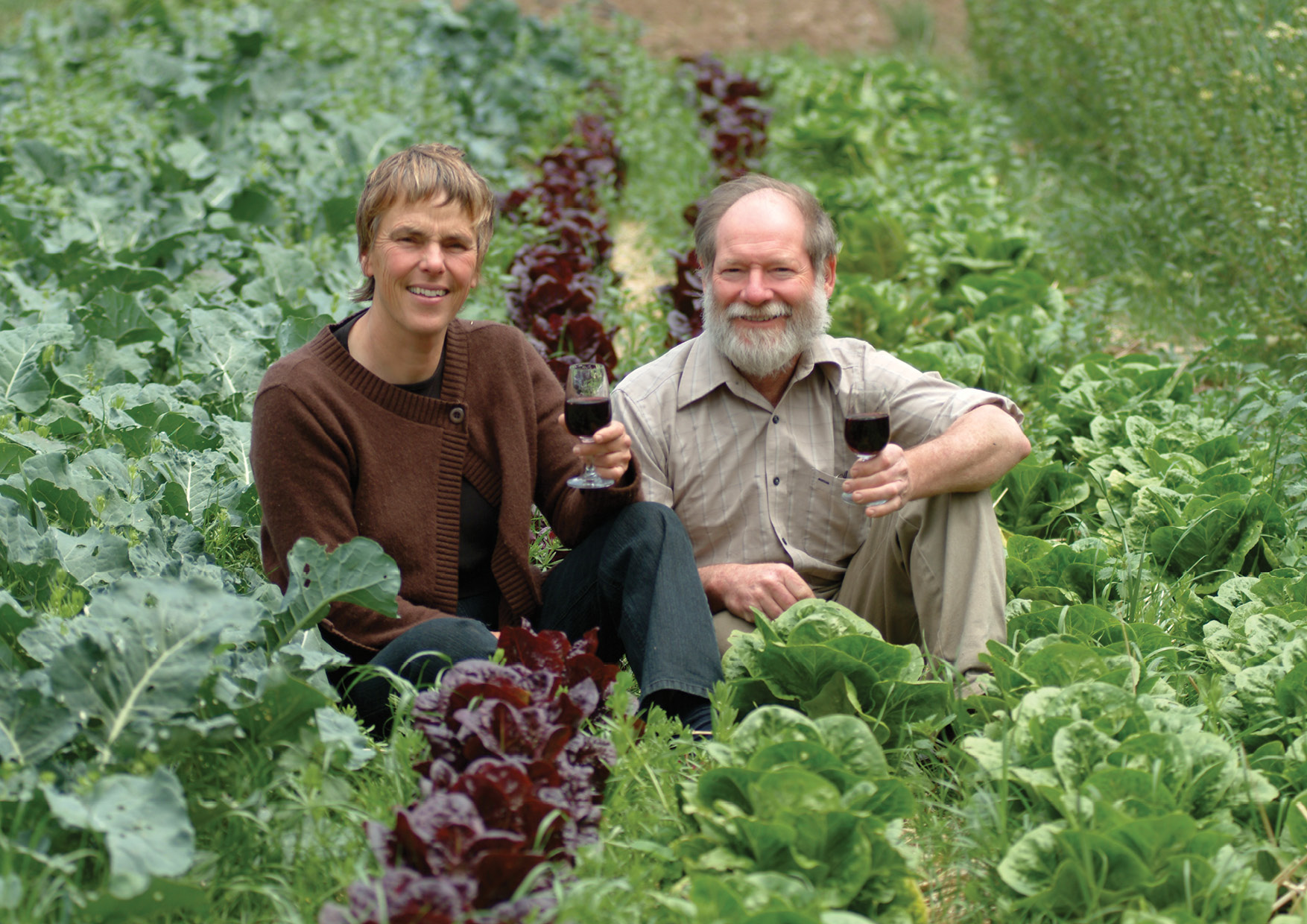
Our certified organic market garden provides produce for sale and feeds our often large household. The commercial scale of the operation allows for efficient methods and appropriate use of machinery. Our food forest produces 150 varieties of fruit and nuts. Selling direct at the Adelaide Showground Farmers Market and value-adding gives us a wide range of products and a steady income throughout the year. Annemarie and Graham Brookman.
Photographed at the Food Forest in Australia by Rosey Boehm.