
Variety warms the soul
Connie says, “I plant flowers, herbs and medicinal perennials around my veggies and fruit trees, and love seeing pollinators and insect predators. I find that the more I plant the more exciting the insect-life in my small garden gets! Planting a mixture of different things also helps support the soil ecosystem. Seeing a buzzing garden full of all the different things I love just warms my soul!” Connie Caogardenwithconnie.com
Photo by Connie Cao (Garden with Connie), on Wurundjeri Country, Melbourne, Australia.
Submit your examples on Instagram #useandvaluediversity

Applying the principle: Use and value diversity
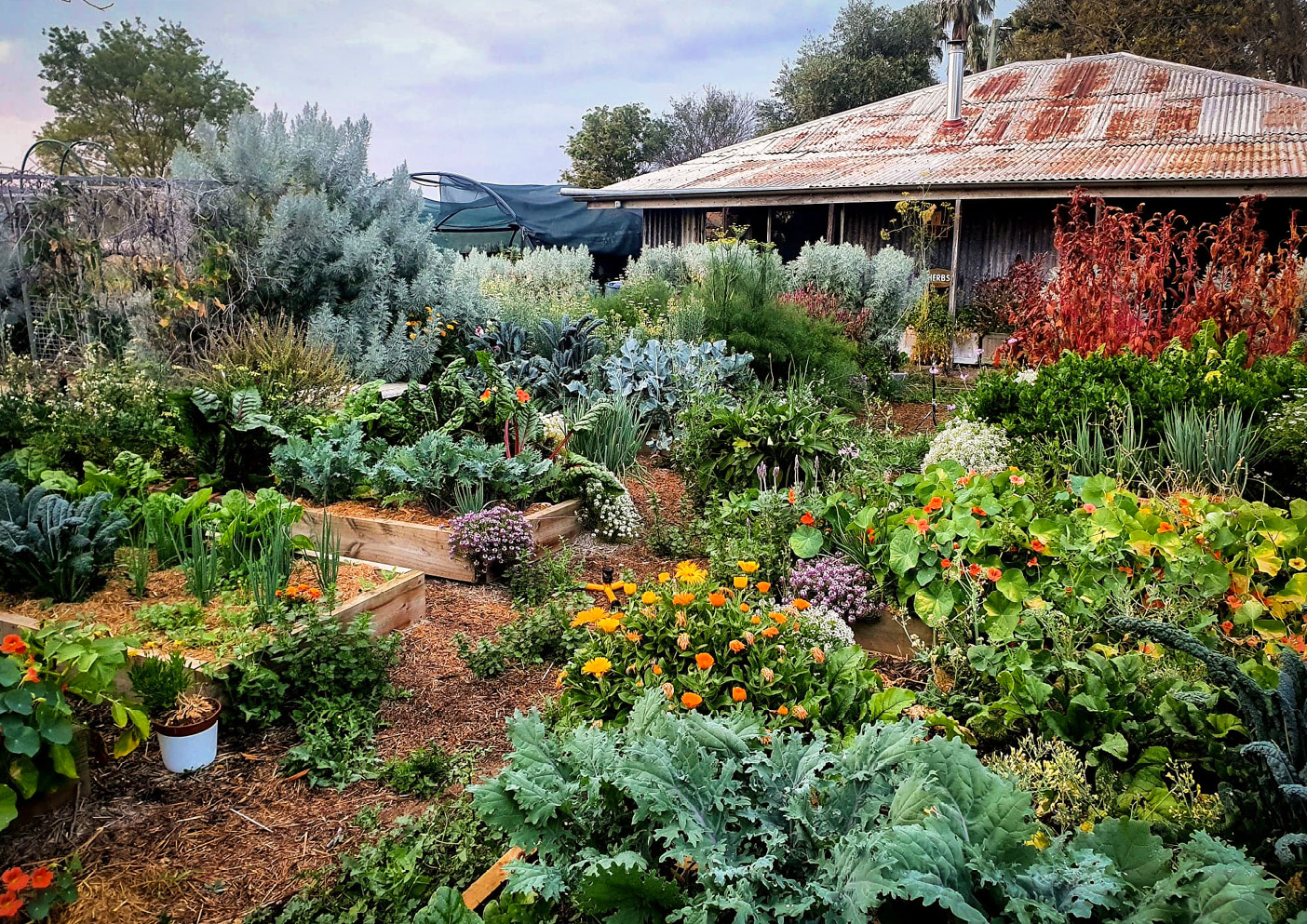
Making it real
Michael developed this SE Qld home garden over eight years to feed his family year round and demonstrate ecological gardening. In 2020 the 1000m2 garden produced 3.3 tonnes of food – 1.7T vegetables, 1.4T fruit and nuts, 70kgs eggs, plus herbs, mushrooms and honey. Self-seeding vegetables required more taking out than replanting. Habitat for parasitic insects plus high fungal soils in the food forest system did most of the pest control, combined with Michael’s active management.
Photo by Michael Wardle, Savour Soil Permaculture on Kitabul Country, Laidley, Queensland, Australia.
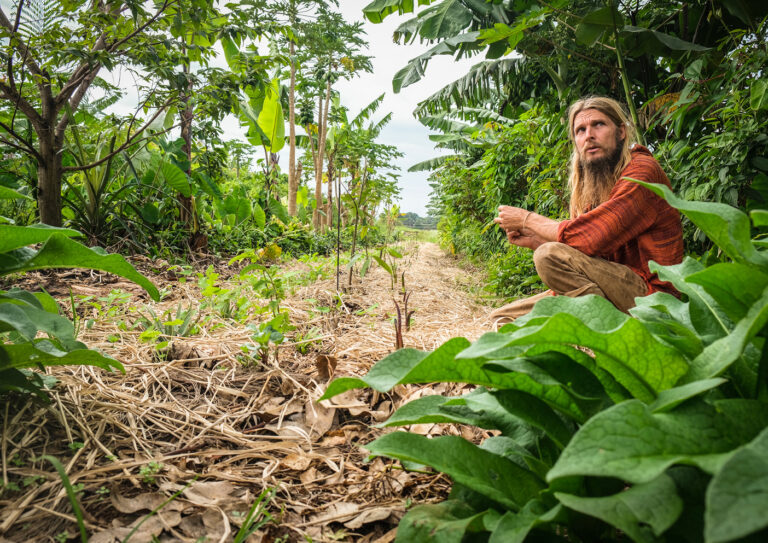
Better together
Working with diversity encourages us to learn to work with new beings and new patterns as they form. Using principles of succession (diversity through time) and layering (diversity through space), agroecology and syntropic farming practices foster healthy, regenerating ecological communities through primary production. Bunya and Evan’s 2ha market garden has been evolving for the last 3 years on leased land, and has trained hundreds of students and volunteers.
Photo taken by Richard telford at The Farm in Byron Bay, NSW, Australia
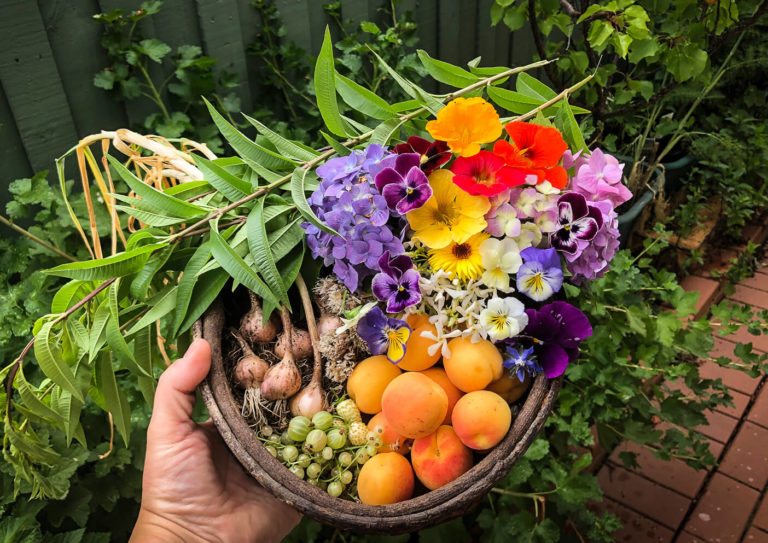
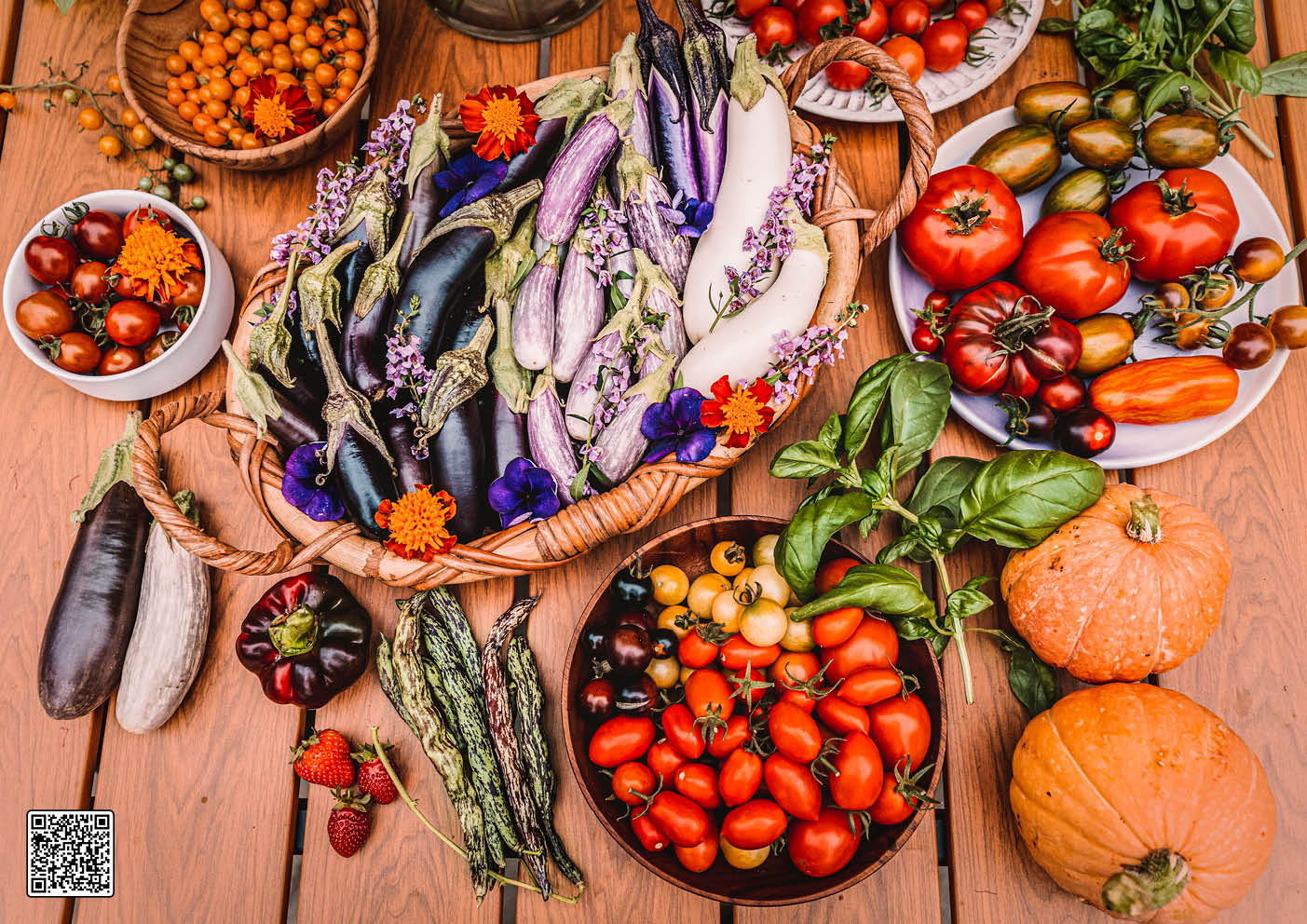
Gardener’s rainbow
This summer bounty of fruit, vegetables, herbs and flowers is harvested from Anna’s urban backyard. She grows primarily in pots, allowing the plants to move with her to each rental property and take advantage of the microclimate of each place. Some plants may suffer in one place but thrive in the next. By growing a wide array of species, there is more resilience and nutrition in her food, as well as habitat for insects and wildlife, and a colourful backyard.
Photo taken by Anna Matilda in Blackburn, Victoria, Australia
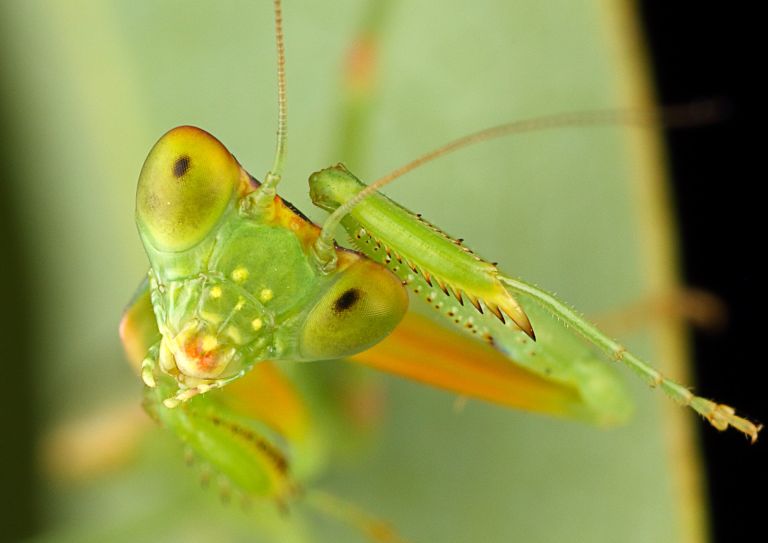
Hungry little friends
The Praying Mantis and other predatory creatures devour insects in our gardens, helping to control plague populations and build diversity. If we don’t always have food for the predators then they will have to go somewhere else, and are unlikely to return in time to avoid a population explosion. By growing a wide variety of plants and expecting just a bit to be eaten by herbivorous insects, we ensure there is always something to eat for our little predatory friends.
Photo by Patrick Kavanagh in Newstead, Victoria, Australia
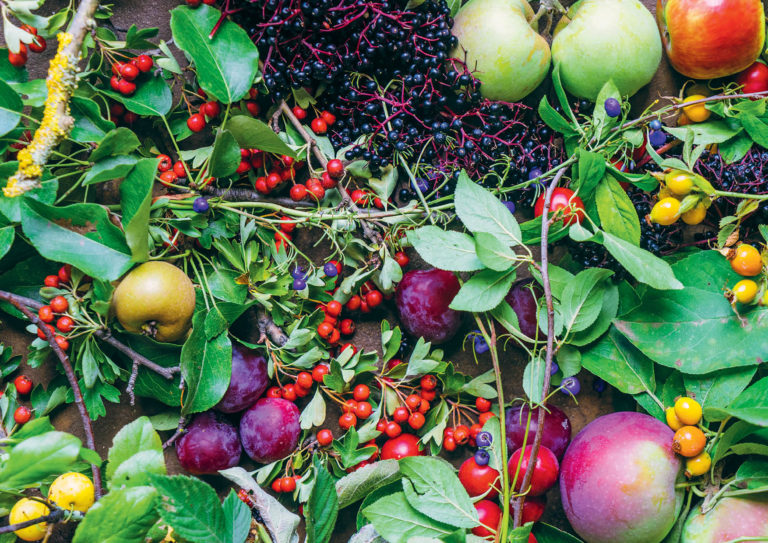
Wild foods
All domesticated plants were sourced from the wild. Food plants have been bred for specialised needs, be that taste, size, longevity, appearance or ability to withstand transportation. The beauty of nature’s self-selection is that naturalised plants require no special care or irrigation, and the genetic variety of locally adapted food plants is maintained. Foraging for wild foods can provide nutrient density, increases connection to place and our ability to identify edible plants.
Photo by Kate Berry from the book Milkwood – real skills for down to earth living. Murdoch Books 2018.
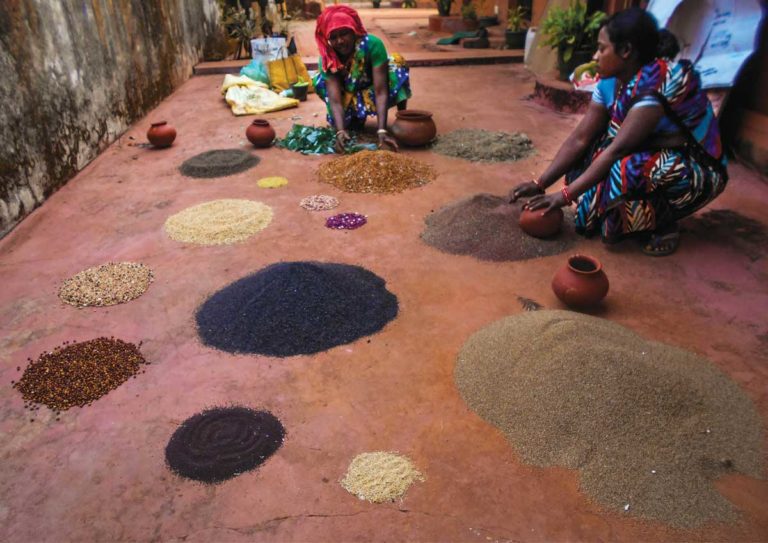
Saving ancient grains for food security
Bhuni and Savitri are being trained in the cultivation of a range of rare millet varieties, which fell out of favour with Indian farmers around four decades ago when they switched to crops such as rice, hoping to make more money. In a country which is facing dramatic water shortages, the many varieties of millet are again being appreciated as a more sustainable crop that can be grown on rainfall, without irrigation. Seeds are collected and distributed throughout the region.
Photo taken at THREAD, Siddharth Village – Odisha in India. A Permafund grant recipient.
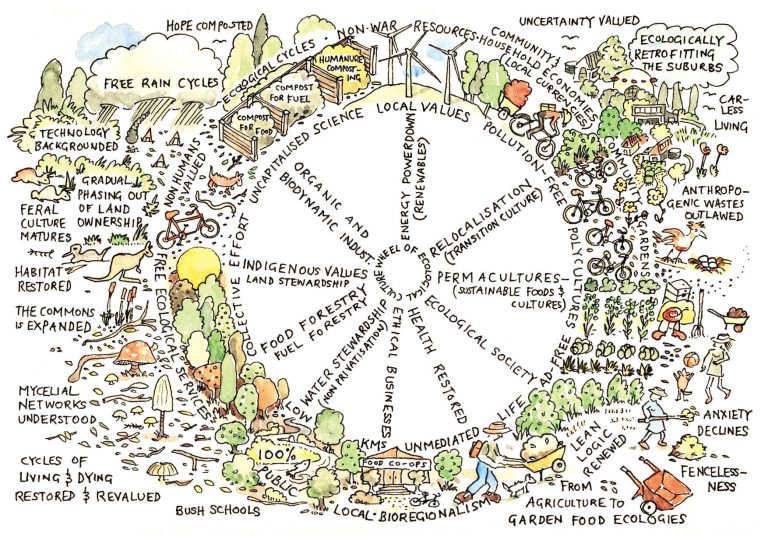
The wheel of ecological culture
“I have come to understand that culture is our daily bread, gardened fruits and forest meads — the origins of which, and our relationships to, are the forms of all that we are. For culture is the propensity to sing more life into life and to nurture the operations and ecologies that make this possible. My wheel of ecological culture illustrates how biodiversity isn’t just relegated to forests and national parks but is in everything we do, everywhere we are.” – Patrick Jones
Illustration by Patrick Jones. See his book The Art of Free Travel in our store.
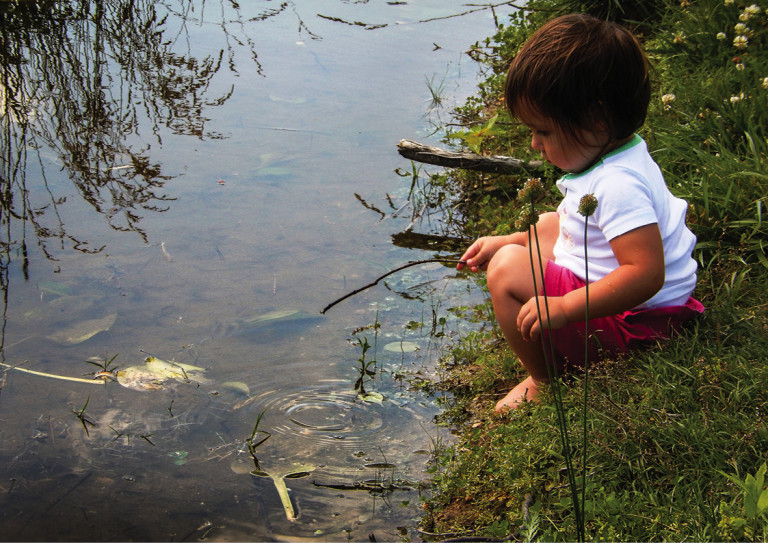
A wonder in the garden
Actively and playfully engaging in the natural world in her own backyard, Lucia experiences sights, sounds, smells, tastes and textures that inspire intrinsic curiosity. Diversity pulls forth a natural sense of wonder and appreciation for life. Frogs croak. Wild grasses reflect in reverse image on the still pond. The images change as a stick is dipped into the water. Such experiences in nature go beyond the physical senses that help connect her with nature. – Jen Mendez
Photo taken in Maryland USA by Jen Mendez
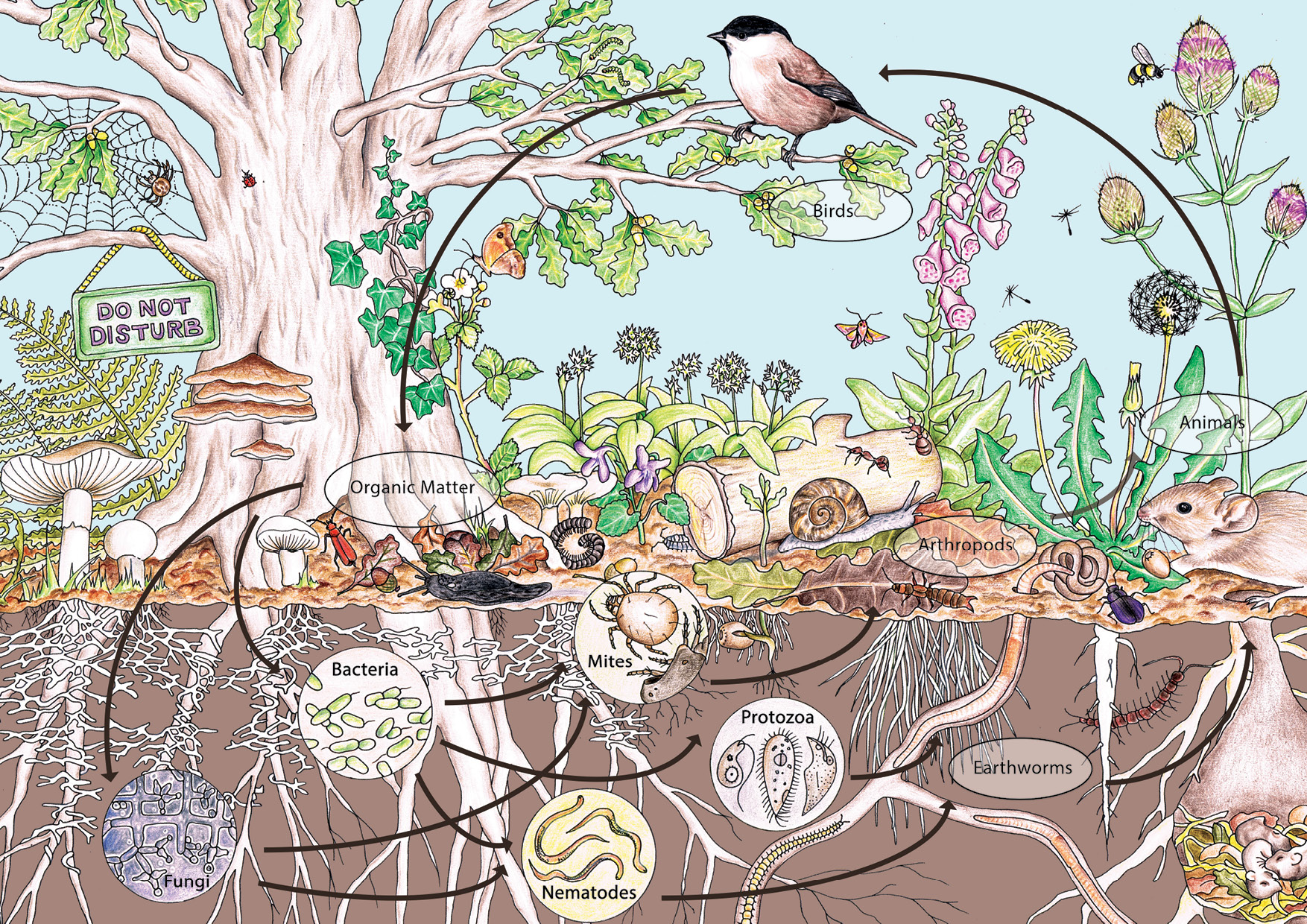
Finding a balance in the garden
Replicating natural systems can reduce inputs and maintenance to our gardens. Anni Kelsey uses a mix of perennial plants; including vegetables, herbs, flowers and some ‘weeds’ in a polyculture to create a mini-ecosystem and boost biodiversity. Adding ‘chop and drop’ mulch and leaving the soil largely undisturbed supports the soil life-cycle, initially by feeding the fungi and bacteria and then in turn the micro-organisms, insects and animals that helps keep the system in balance.
Illustration contributed by Emma Lawrence. See Anni’s book Edible Perennial Gardening.
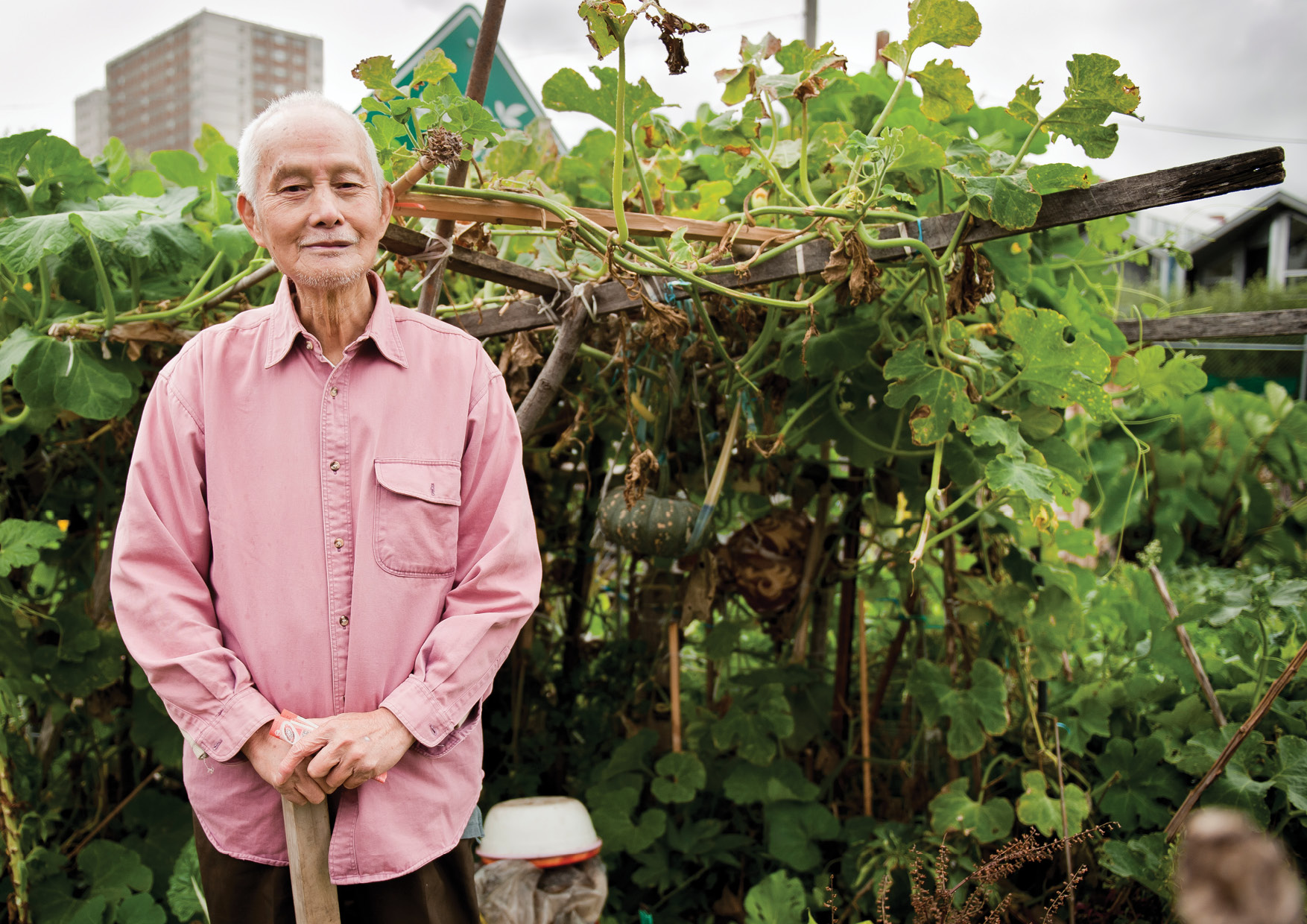
Culture and community in the garden
Mr Shi Tao Mo with his plot in one of the 19 inner city public housing community gardens managed by Cultivating Community. Participating gardeners come from diverse backgrounds with over 55 language groups represented and a wide range of crops grown that reflect the tastes of the many cultures. The highly productive gardens provide tenants with access to land that they use to grow their own food as well as a place to meet with others to share and learn new skills.
Photo contributed by Rachelle Davey.
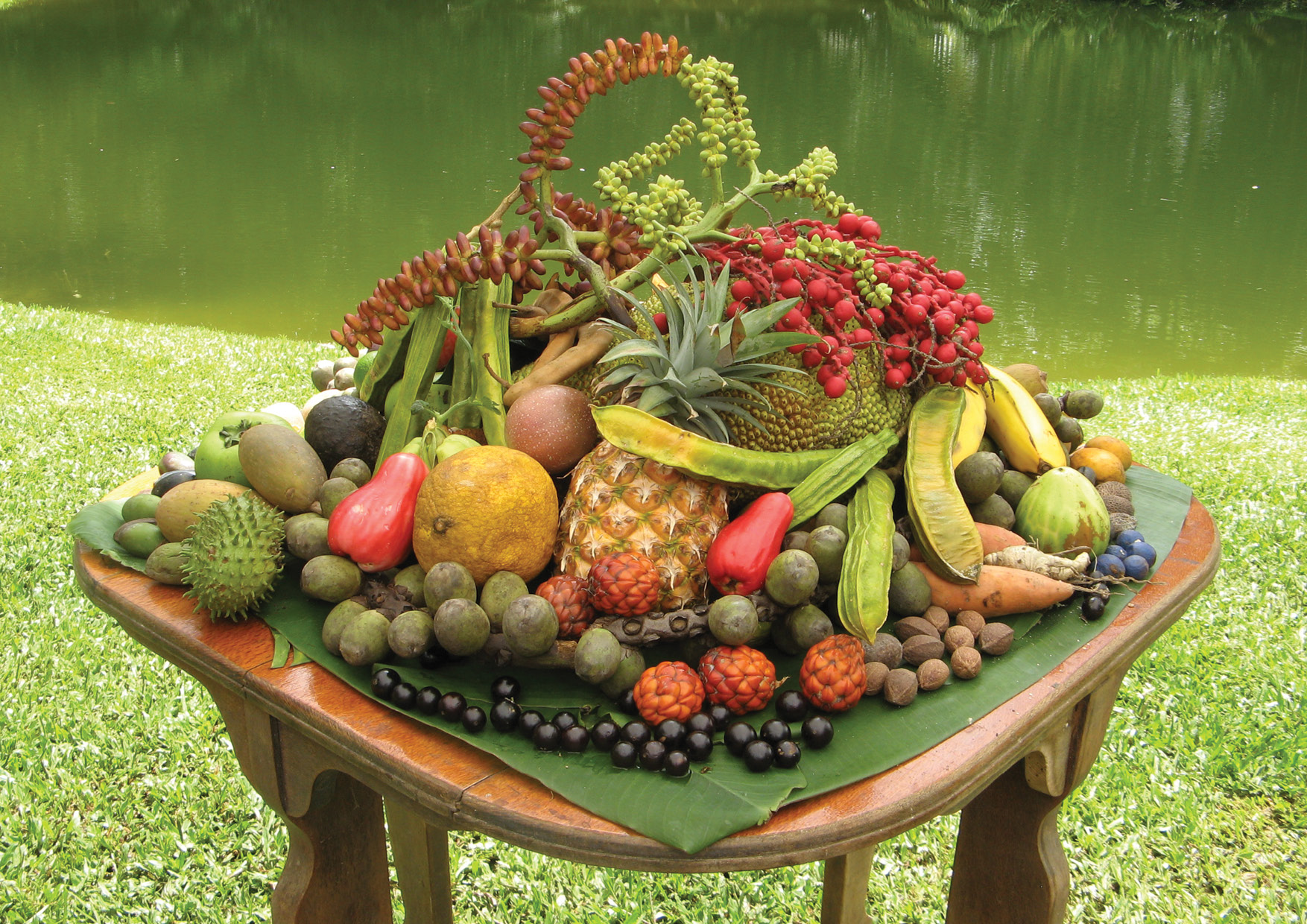
Tropical harvest from a botanical wonderland
In the wettest part of the driest continent, the Botanical Ark, in far north Queensland, has transformed degraded cattle grazing country into botanical gardens that preserve tropical plants valued by indigenous people from around the world. This almost unbelievable harvest of tropical fruits is just one of the products of their diverse system. The gardens also host an array of tropical plants used for their spices, medicines, cosmetics, fibres, oils, dyes and building materials.
Photo contributed by Robin Clayfield. See Robins book You can have your Permaculture and eat it too! in our store.
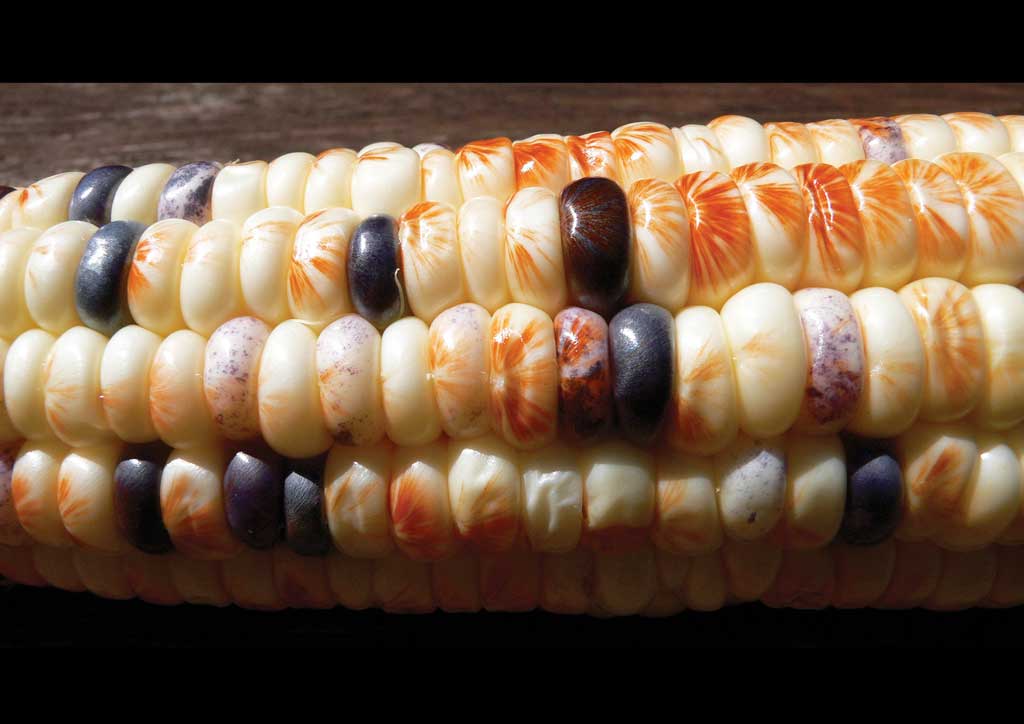
Anasazi sweet corn
As an experiment I’ve been growing this Anasazi sweet corn, an open pollinated heritage variety. Every cob is vividly coloured, the flavour is sweet, and so much heartier than the luminous yellow sweet corn I’m used to. This is the third cob I’ve picked – the first was deep red – and I’m looking forward to seeing if there will be any that are purely purple or blue.
Photo and text contributed by Joel Catchlove
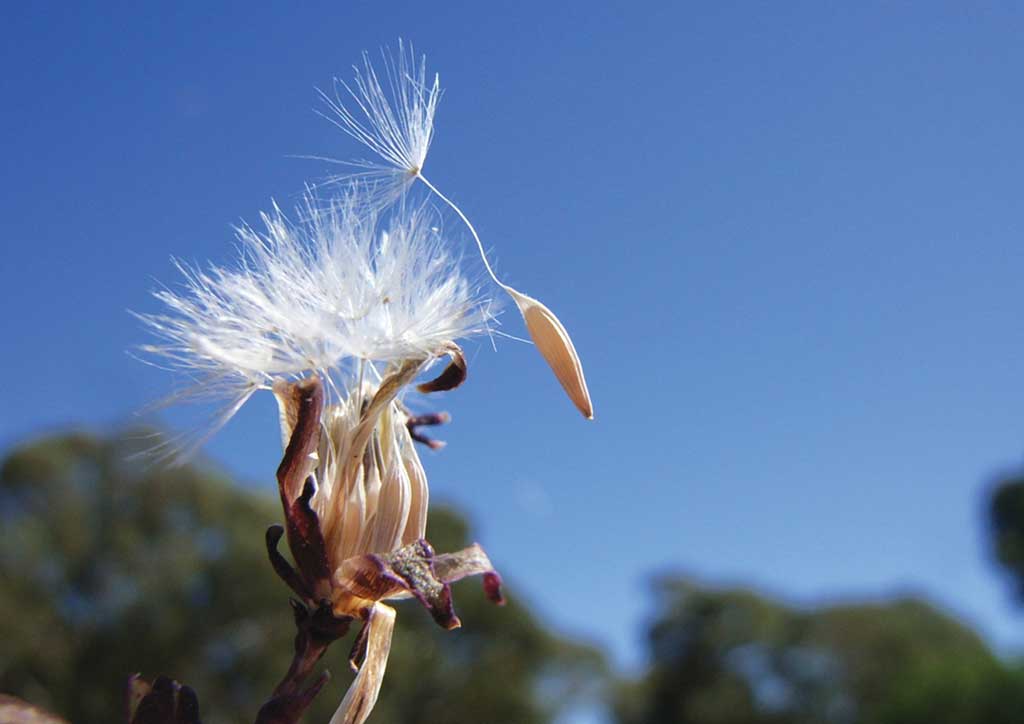
A lettuce seed takes off
This seed taking off on the breeze reminds me of the free and independent spirit of permaculture. We grow our vegetables and save our own seeds for plant quality, our health, to reduce food miles, and as part of our strategy for food security and self-reliance. This little seed might land and germinate in another part of our garden.
Photo and caption contributed by Annemarie Brookman
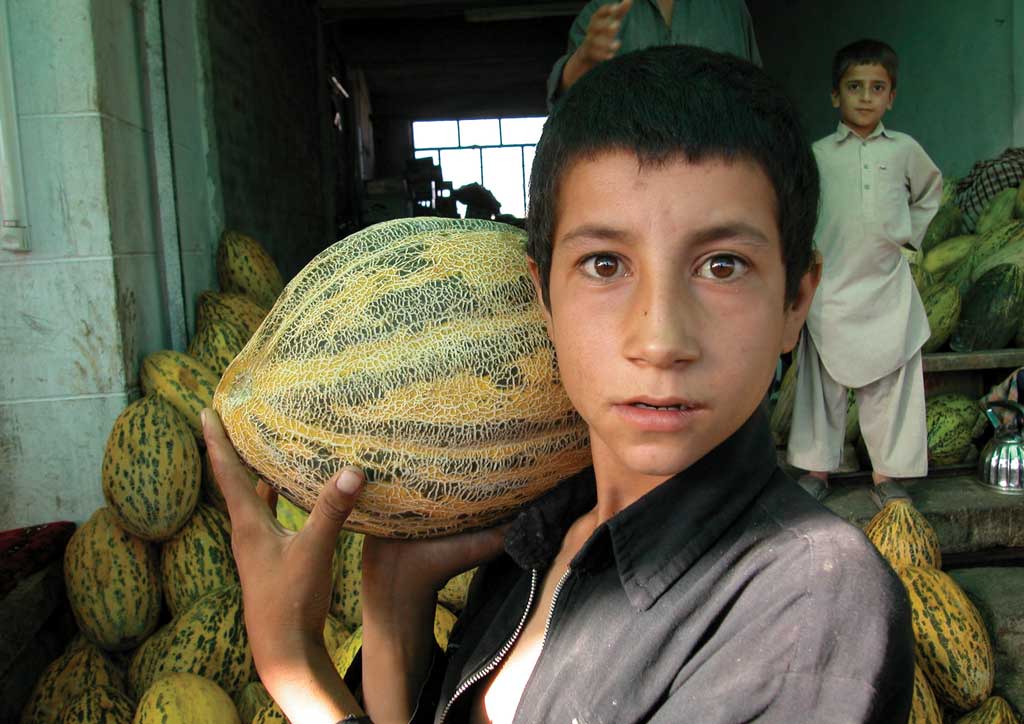
Diversity alive in Afghanistan
Afghanistan remains the home of hundreds of village-bred varieties of fragrant cantaloupe rock-melons. Skilful farmers produce crops in areas that have very low rainfall, frequent sandstorms and both scorching and icy winds. Villagers save the seeds of the tastiest melons, and eat the rest as nutritious anthelmintic snacks. Seeds are part of dowries, as in many peasant cultures.
Photo taken at the Herat market 2003, contributed by Michel Fanton co-author of The Seed Savers' Handbook
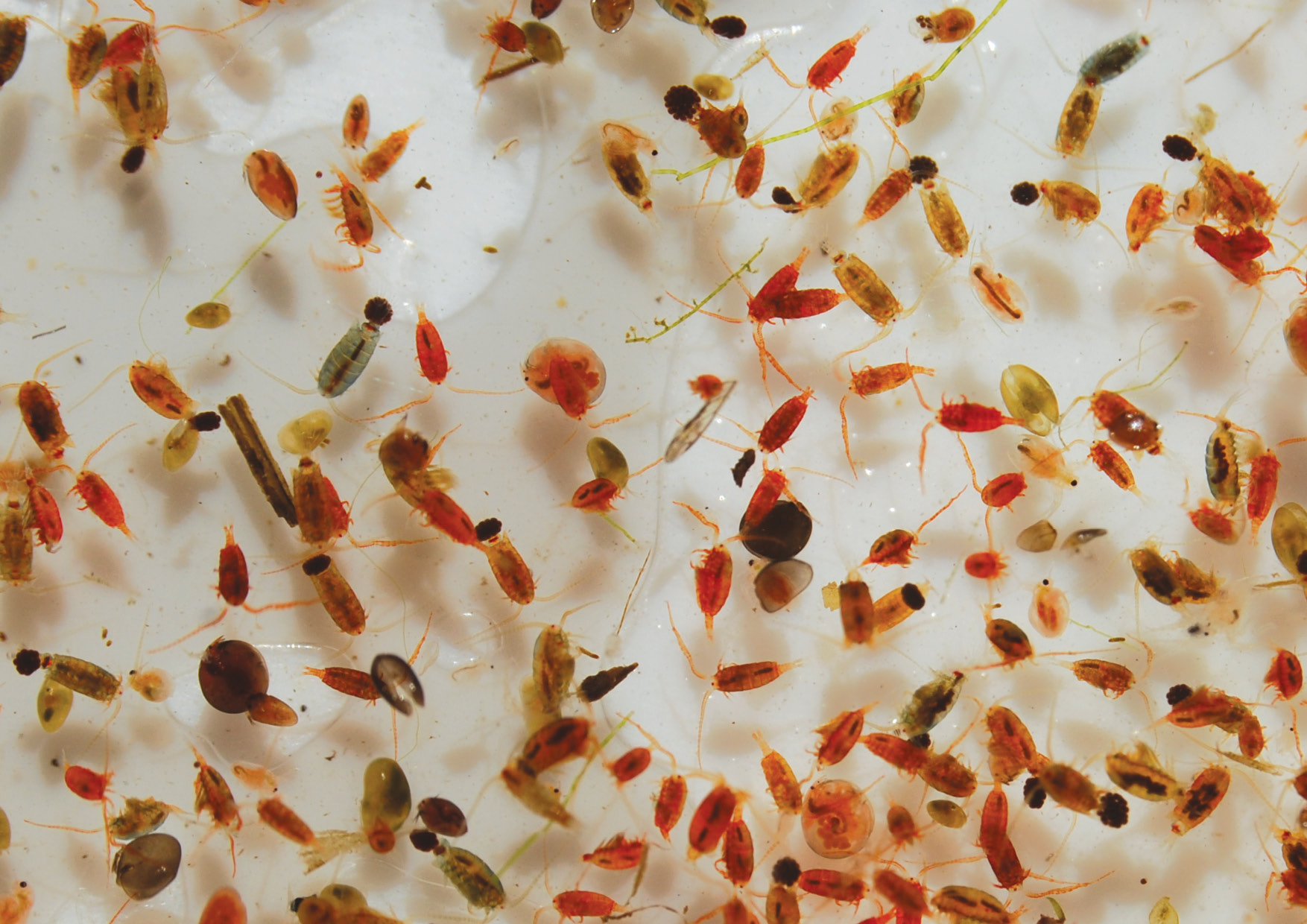
The teeming zillions
Two species of shrimp-like copepods, 1 to 2 mm long, are perfectly adapted to life in a rainwater pool along with other microfauna. Although closely related they all thrive together because each combs the water for different types of algae. Freshwater copepods reduce mosquito breeding through greater efficiency in harvesting the same foods, while marine copepods sequester carbon to the ocean floor on a monumental scale.
Photographed at Dragonfly Aquatics Nursery, Australia by Nick Romanowski